Wildlife Madagascar : the impressive rainforest of Andasibe and Ranomafana national parks
As a local Malagasy tour operator, we believe that the unique beauty of Madagascar’s wildlife is mostly best experienced in its stunning rainforests. Our journey began with a conviction about the incredible biodiversity found in places like Andasibe and Ranomafana National parks.
Madagascar holds a unique wildlife. According to the World Wildlife Fund WWF, about 90% of fauna and flora found here is endemic to the island which means they are not found anywhere else in the world.
Before we dive into the details of your guide for your next adventure, let’s first understand what makes Madagascar so impressive.
Located just off the coast of Africa, this great red island is defined by its long-standing isolation, a fact that has allowed its fauna and flora to thrive in unique and fascinating ways.
With a surface area of approximately 587,000 square kilometers, Madagascar is home to an incredible diversity of landscapes. This is divided into distinct climate zones across the island : from the lush, evergreen rainforests in the east to the arid spiny forests of the south and the dry deciduous forests in the west. The central highlands, meanwhile, enjoy a more moderate climate. This variety of habitats is the foundation for the island’s unique biodiversity.
The rainforests, in particular, are sanctuaries for some of Madagascar’ richest wildlife. These vital areas are managed as a network of National Parks and protected reserves, overseen by the non-profit organization such as Madagascar National Parks. Many of these sites also involve local communities and private Foundations in their conservation efforts.
In this guide, we will focus on two of these world-renowned parks which are Andasibe and Ranomafana.
Andasibe
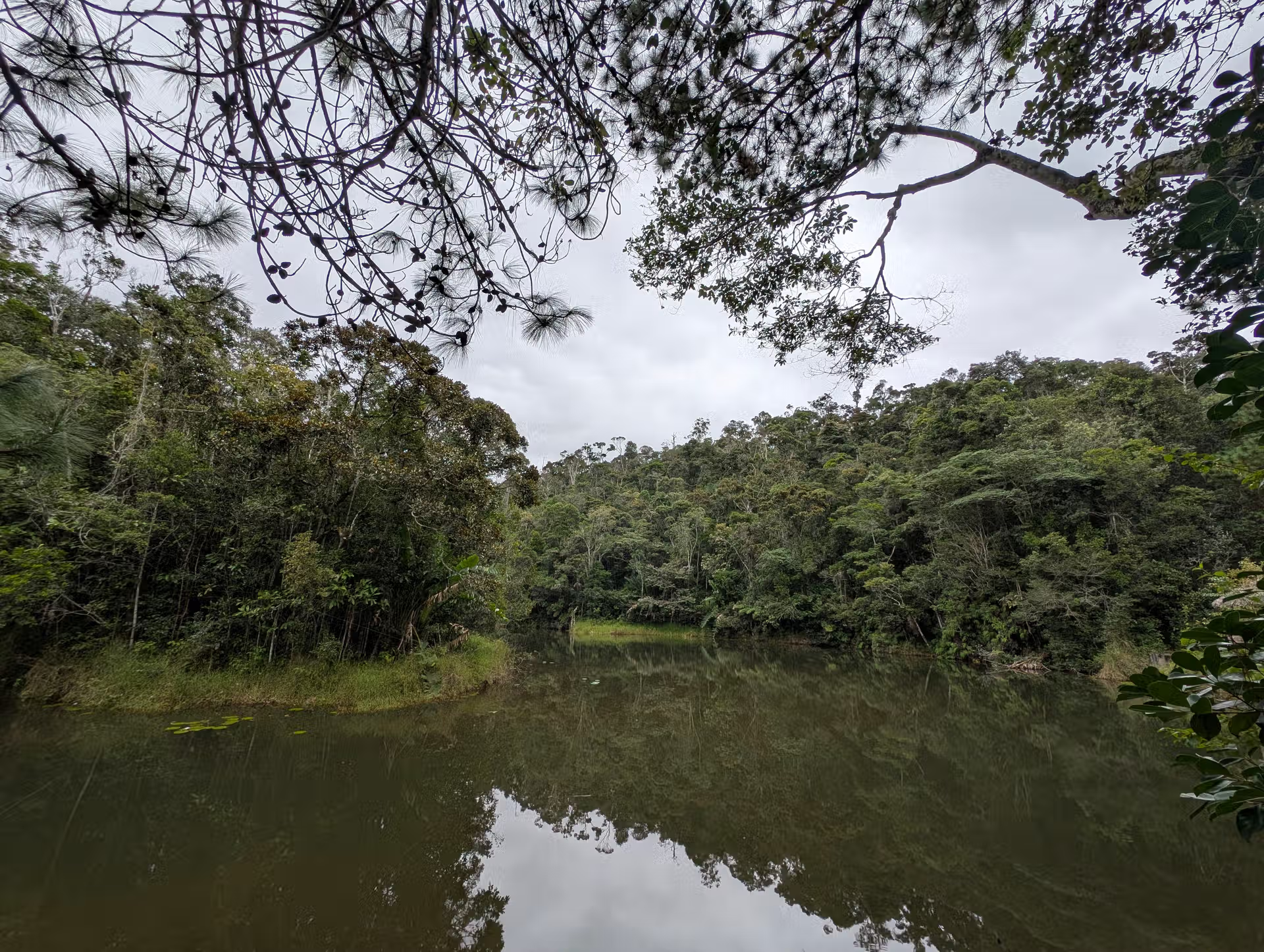
The Andasibe area is home to one of Madagascar’s best rainforest national parks and reserves.
The area encompasses two fundamental national parks : the Analamazaotra and Mantadia National Park; they are often called Andasibe-Mantadia National Park.
Here, the highlights are a captivating variety of lemurs, reptiles, and insects. Not only the fauna, but in addition, the flora is just as outstanding. This features with beautiful orchids (depending on the season to see them blooming) and precious woods like palissander and rosewood. You will also discover unique endemic therapeutic plants that local communities have used for generations to treat various illnesses.
How to go?
Situated just 150 kilometers east of Antananarivo, the bustling capital where all international flights arrive. This remarkable accessibility makes it a must-visit destination for anyone travelling to the island.
Because of this convenient location, by car, the road is about 4 hours from the capital. This easy journey makes Andasibe as a perfect starting point for your wildlife adventure in Madagascar.
The journey to Andasibe follows national road number 2, thanks to some recent road reparation, the section from Antananarivo till Andasibe is now better compared to other regions.
Please note therefore that this national road is a key route connecting the capital with the port city of Tamatave. Travellers should be aware that this road is a major commercial artery and may experience increased truck traffic, which could affect travel times in some time.
Anyway, for those seeking a unique and luxurious travel experience, helicopter transfers from Antananarivo are also available on request, and it can be arranged through different providers.
What to expect when exploring Andasibe-Mantadia National Park?
Once you’ve arrived in the Andasibe area, you will find that the reserve and parks are conveniently located. For this reason, you won’t need to spend a full day driving to reach them.
The Analamazaotra national park is particularly easy to access, as most hotels are less than a 20 minutes drive from its entrance. Some of our previous guests even enjoyed a pleasant walk from their hotel to the park entrance. This in order to take advantage of the safe and calm surroundings before arranging a car for their return journey.
In contrast, reaching the Mantadia National Park, a primary forest with an array of wildlife is a more challenging effort. It requires approximately a two hours drive from Andasibe village, as the road is steep, winding and filled with potholes. It can also become very muddy, when rain falls. For this reason, a 4WD vehicle is essential for a safe and comfortable trip to Mantadia.
During the daytime
Analamazaotra offers a variety of trails that are mostly quite easy, making the park perfectly fits to almost every type of visitor. Visits can last from two to four hours or even more, depending entirely on your preference. While Mantadia is a much wilder and deeper primary forest, it also features trails that can suit different visitor levels.
Lemurs flagship species
The Indri-indri (Babakoto)
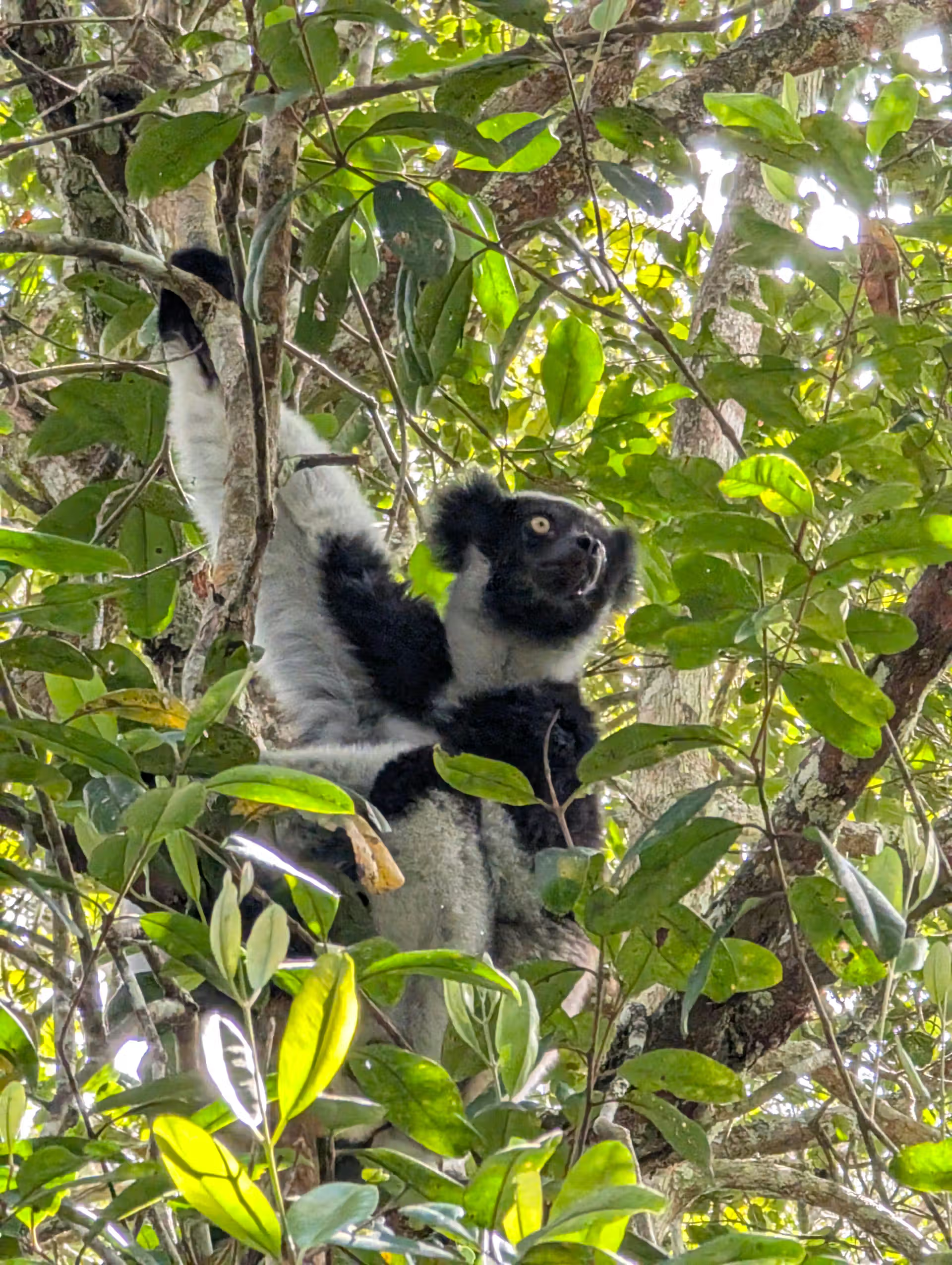
The main objective for most visitors to both Analamazaotra and Mantadia is to see the Indri indri, the largest living diurnal lemur. Known for its distinctively loud vocalizations, this lemur’s call can be heard from afar. Such as from outside the park, and even from your hotel if you’re staying nearby. As you may already know, lemurs are native and endemic to Madagascar, making them a true wonder of the island. With approximately 112 species found in all Madagascar, the Indri, also known as ‘Babakoto’, stands as the largest. It can measure up to 70 cm in body length and weigh about 9,5 kg when reaching adulthood. A fun fact about the Indri is that despite its size, it has the shortest tail among all lemur species, only about 5 cm.
THE DIADEMED SIFAKA DANCING LEMUR
Beyond the Indri, you may also spot “the fluffy” Diademed Sifaka, which is part of the “dancing lemur” family. This family earn this name from their unique method of locomotion : a vertical clinging and leaping motion. When crossing open ground, they maintain an upright posture and hop sideways on their hind legs. At the same time, they are using their arms for balance, which creates the appearance of dancing.

THE GREY BAMBOO LEMUR
The Grey Bamboo lemur (hapalemur Griseus) can also be found in these parks. As their name suggests, they feed on bamboo, which makes up about 70% of their diet. Using their tiny hands and teeth, they skillfully extract the tender heart of the endemic bamboo species. The remaining 30% of their diet consists of flowers, leaves, such as those from the camellia family.

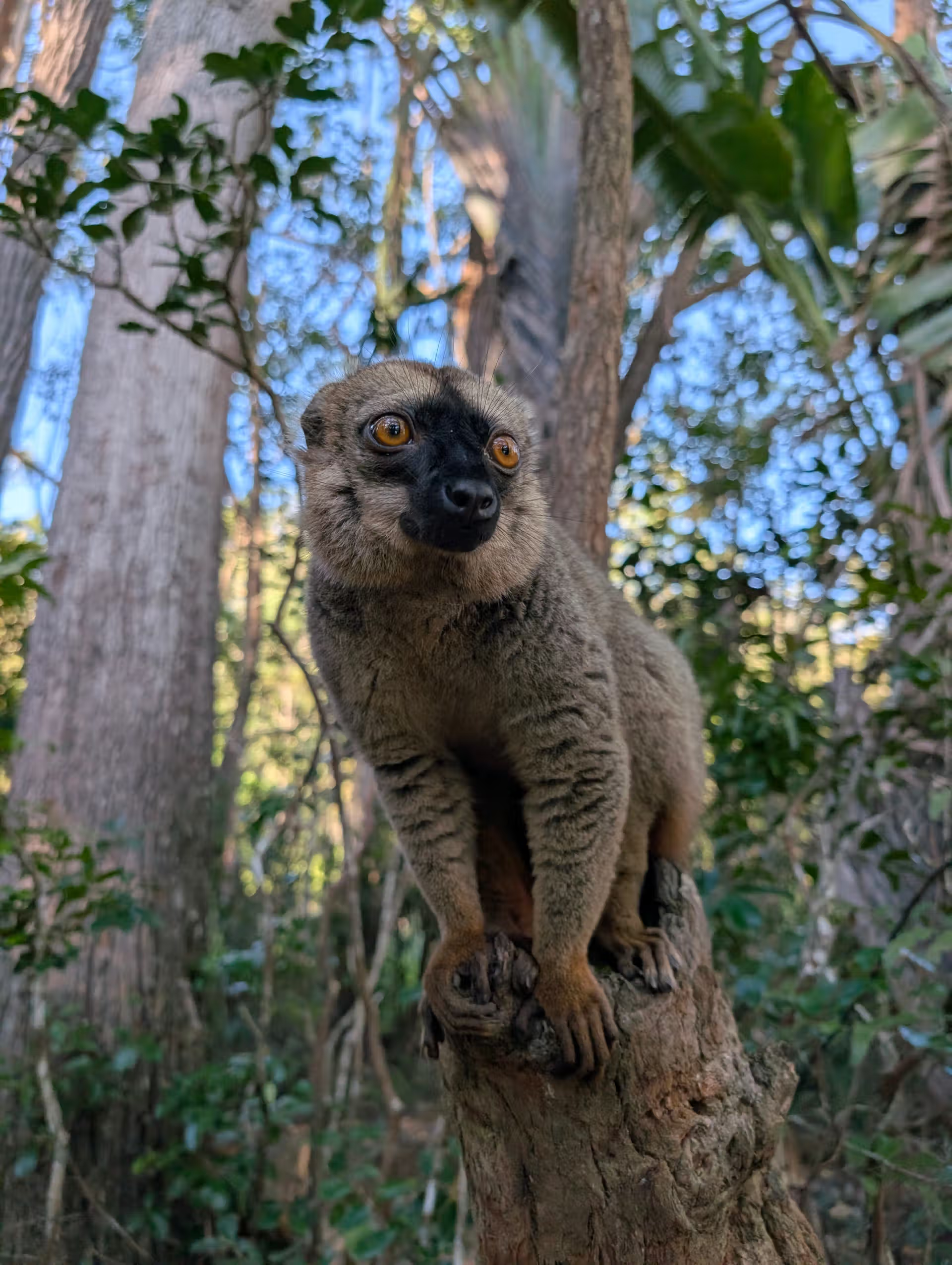
THE COMMON BROWN LEMUR
Additionally, the common brown lemur is another species you might encounter during a day visit to Andasibe. These lemurs are cathemeral, meaning they are active both day and night, especially during a full moon, when their distinct calls can be heard.
Due to human activity and growing comfort level with people, it’s quite common to spot them near the park’s entrance, mostly in the afternoon where they often greet visitors.
Andasibe : the place to be for naturalists
Andasibe is also widely regarded as one of Madagascar’s best birdwatching spots.
Insect enthusiasts will be just as delighted in Andasibe. Much like Ranomafana, the park is home to the endemic giraffe-necked weevil, a tiny red insect with a disproportionately long neck that is a truly fascinating sight.

Furthermore, Andasibe is an excellent place to spot some of Madagascar’s tiniest chameleon species, known as Brookesia. While these small reptiles are also found in northern Madagascar, their presence in Andasibe adds another layer of unique wildlife to discover.
Your tour with FAR Madagascar is designed for your comfort and enjoyment. For a truly immersive experience, we can arrange a full-day park visit at your own pace, complete with a provided picnic lunch.
During the night
One of the top activities to do in Andasibe is a nocturnal visit. This unique experience consists of a walking tour at nightfall with a local guide to spot animals that are only active after dark.
The targets
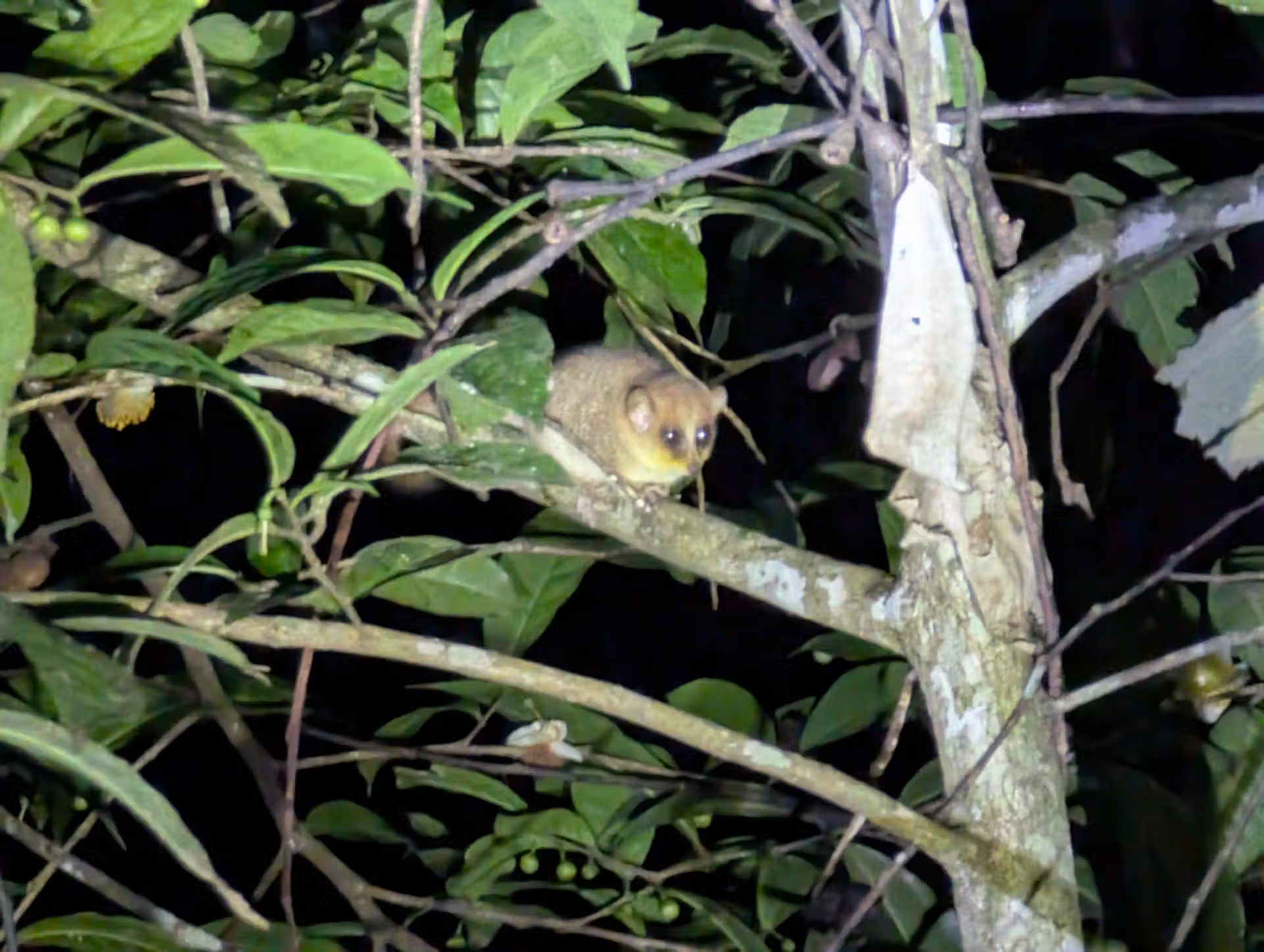
The primary targets of this nighttime walk are the park’s tiny nocturnal lemurs, such as the mouse lemurs (Goodman’s Mouse lemur) and dwarf lemurs (Crossley’s or Furry-eared Dwarf lemur). Don’t forget to bring a flashlight! Your local guide will “scan” in the tree branches to find them, as the lemur’ eyes reflect the light like a mirror, giving away their location. To preserve the animals’natural behavior, the guide will only allow you to take photos using low light for a brief time.
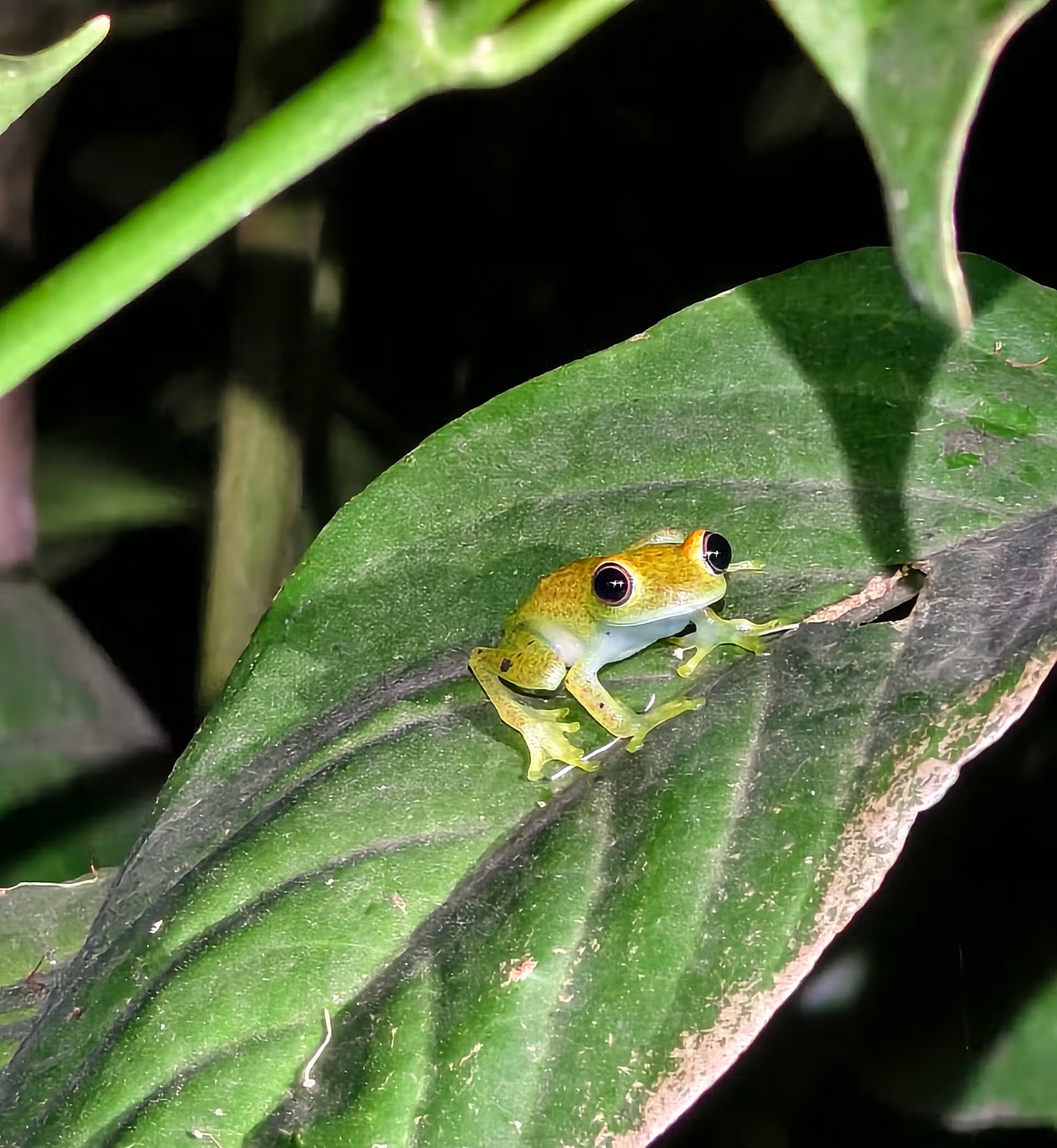
With a little luck, you may also encounter various frogs, reptiles including chameleons, leaf-tailed geckos, and even snakes. It is important to remember that all of Madagascar’s snakes are not deadly venomous and not aggressive, so you can observe them without worry.
The places for nocturnal visits
In general, most of the nocturnal visits are not allowed inside the most of the National Parks themselves.
Thankfully, a new regulation from MNP, effective September 01st 2025, allows some national parks like Andasibe and Ranomafana to offer night visit.
Anyway, these night walks are also mostly done in the surrounding areas. You will explore a variety of spots such as :
- VOIMMA reserve: it’s a community-managed protected reserve that is nearby to the Analamazaotra section. Stands for “Vondron’olona miaro mitia ala” which means local people who love and protect the forest. This name perfectly describes its mission. This reserve also offers a chance to support local conservation efforts directly.
- Maromizaha Reserve : Managed by GERP, and supported by FAPBM. Maromizaha is a valuable reserve that is also worth visiting.
It’s also important to note that these reserves are not only for night walks. Day visits are highly recommended and offer a different perspective on the unique flora and fauna of the Andasibe area.
- Roadside nocturnal walks (Yes!) : Both Andasibe and Ranomafana. The forest is so alive that it spills out onto the road itself. The road leading to Andasibe village runs adjacent to the national park. For this reason, it creates opportunities to spot nocturnal animals in the surrounding forest from the roadside.
Fascinated by the Indri lemur? Get in touch for tour itineraries and package estimation prices.
Ranomafana
Ranomafana, a picturesque Tanala village in the southeastern part of Madagascar, is most famous for its striking national park. Covering thousands of hectares of lush rainforest, the park is a sanctuary for an incredible variety of wildlife. Beyond the park’s iconic lemurs,a diverse array of endemic mammals and over a hundred bird species call this lush forest home.
Reptiles enthusiasts will be captivated by dozens of unique species, from magnificent chameleons to masterfully camouflaged leaf-tailed geckos. The park’s moist environment is also a haven for a wide variety of amphibians. This includes many different frog species such as Mantidactylus majori, red-eyed bright-eyes frog (Boophi s luteus). Furthermore, Ranomafana hosts endemic mammals such as lowland tenrec, spotted fanaloka civet.

HOW TO GO?
To reach Ranomafana from Antananarivo, you will travel south along the iconic National road number 7 (RN7). Since the park is located about 420 kilometers away, the journey is typically divided into a two-days drive. With a recommended overnight stop in cities like Antsirabe or Ambositra for example.
Even though some road-reparations have been started from Antananarivo to Antsirabe, be aware that the next parts leading to Ranomafana itself can be challenging. This is due to a number of up and down bumpy muddy sections on the national road 7. The journey, however, is a key part of the experience, offering breathtaking views and a true immersion into Malagasy life.
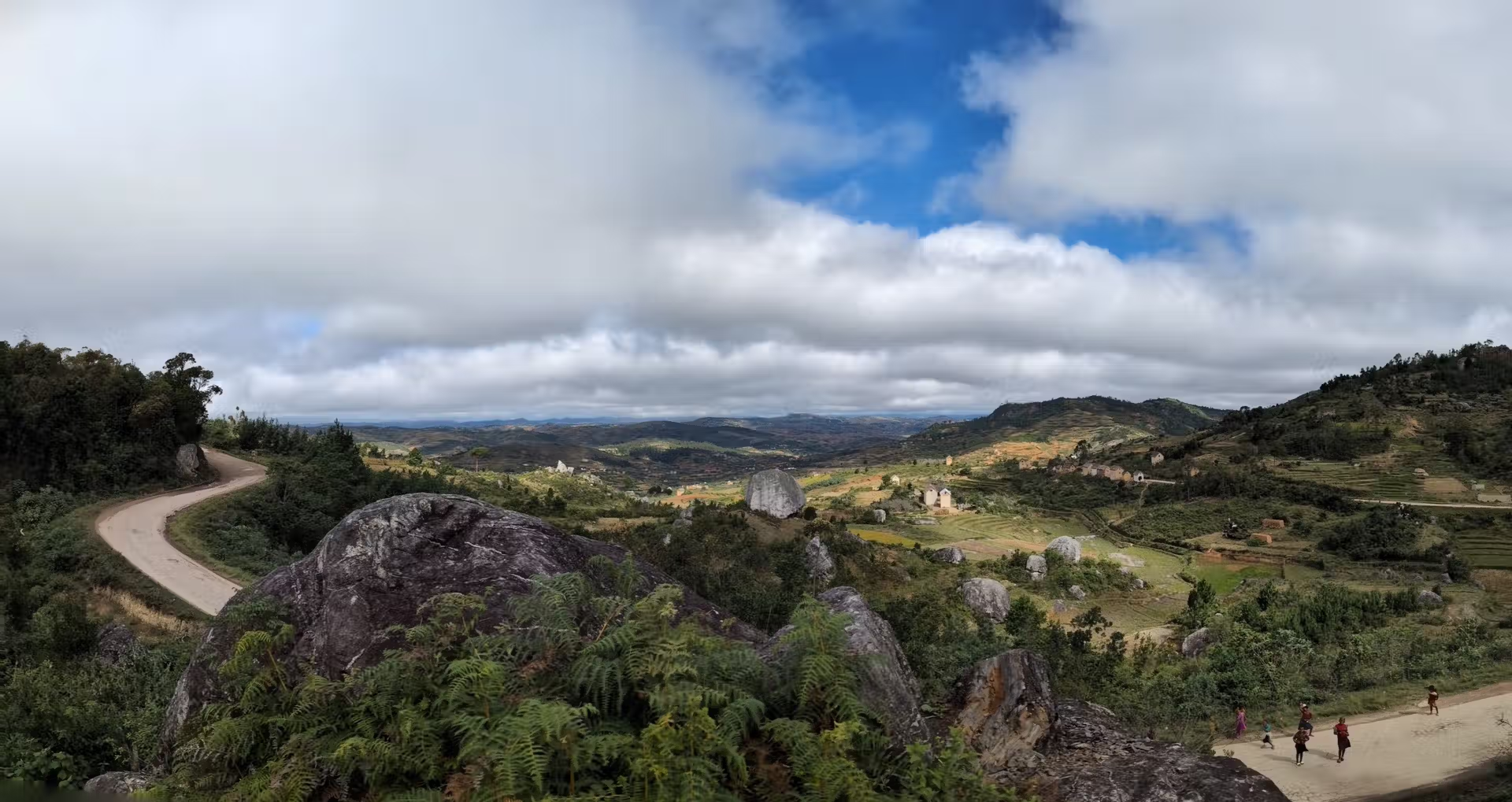
Similarly, if you are travelling from the South, such as Tuléar, Isalo National Park or Ambalavao, you will use National Road 7, passing through the city of Fianarantsoa before joining the park.
For those who prefer a quicker journey, it is possible to arrange a private charter flight from Antananarivo. The nearest airport is in Fianarantsoa, from which it is a scenic two-hour drive to the park entrance.
Upon arrival in Ranomafana, it’s important to note that most hotels are about a 15 minutes drive from the park entrance. SETAM Lodge is one of the few exceptions, being the closest to the park. The good news is that these transfers are seamlessly included in your FAR Madagascar tour package you book with us, ensuring a smooth and hassle-free experience.
WHAT ARE THE HIGHLIGHTS?
Ranomafana is well-known for its National Park, which was designated as a UNESCO World Heritage site in 2007. The park is characterized by its high altitudes, which vary from 600 to 1,400 meters. It thrives in a tropical, humid climate and boasts a diverse ecosystem, a distinct contrast to Andasibe’s high altitude evergreen rainforest in the central highlands. This park is also classified part of Madagascar National Parks “Parc Phares”. This includes Bemaraha (Tsingy de Bemaraha), Lokobe and Montagne d’Ambre National Parks.
Day visit of the national park
Walking inside Ranomafana National Park is truly a must-do experience. From the entrance, you’re greeted with a panoramic view of the dense forest, offering a window into the wonders that await you. As you descend the stairs to the starting point, you will be immediately immersed in the cool shade. This is the home of tiny reptiles such as the famous “brookesia supercilliaris” and Satanic leaf-tailed geckos. You read it well! Don’t be afraid of the name, this gecko is much cuter than it sounds and non-aggressive.
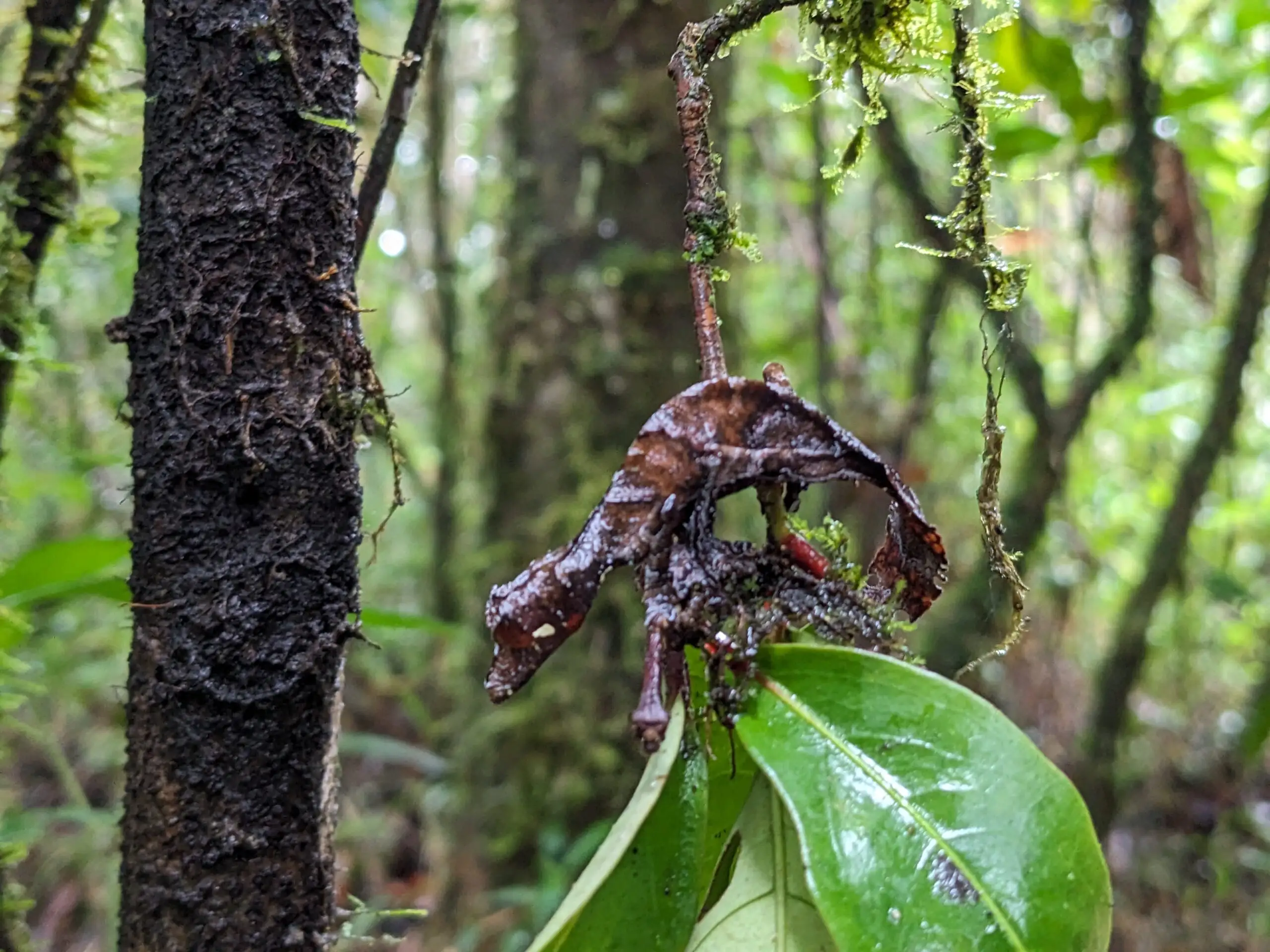
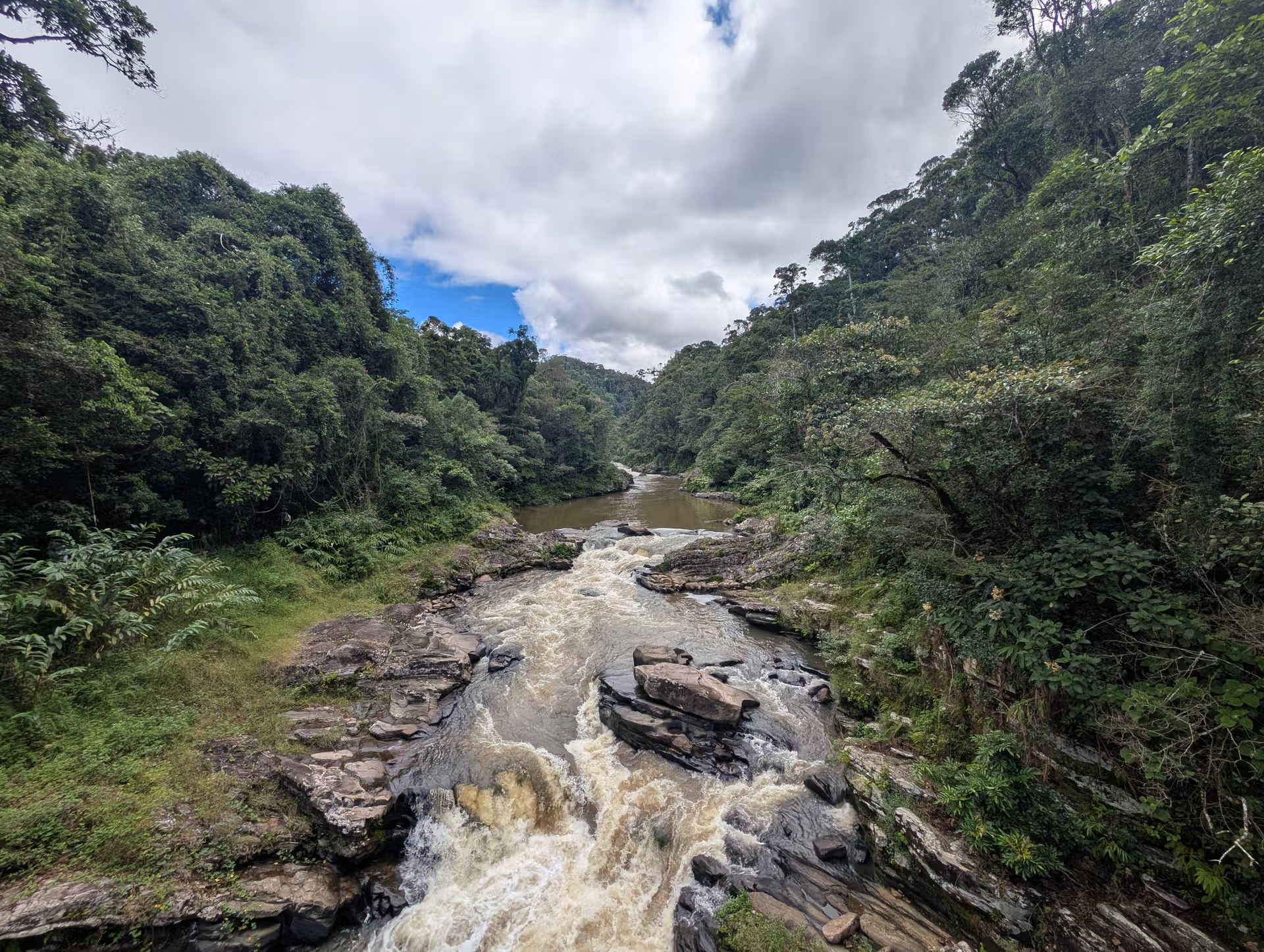
The walk truly comes alive with the ambient music of a rushing stream. You will soon cross a river bridge, offering a terrific view of the water flowing through big rocks in the heart of the forest.
The park hosts 14 species of lemurs. The main targets for your visit being the endemic golden bamboo lemur (Hapalemur aureus) and the Milne-Edwards’ sifaka (Propithecus edwardsi).
Ranomafana : the birdwatchers’ destination
Ranomafana is a world-class destination for birdwatchers. The park’s vast and humid rainforest provides the ideal habitat for a remarkable diversity of avian life, with over 100 species recorded, many of which are endemic to the island. These include unique ground-rollers, a family of five species found only in Madagascar, with four present in Ranomafana. Other notable sightseeings include various vangas, such as the spectacular Blue Vanga and Pollen’s Vanga. Not only Vangas but also several Coua species, the Madagascar Crested Ibis, and the Henst’s Goshawk.
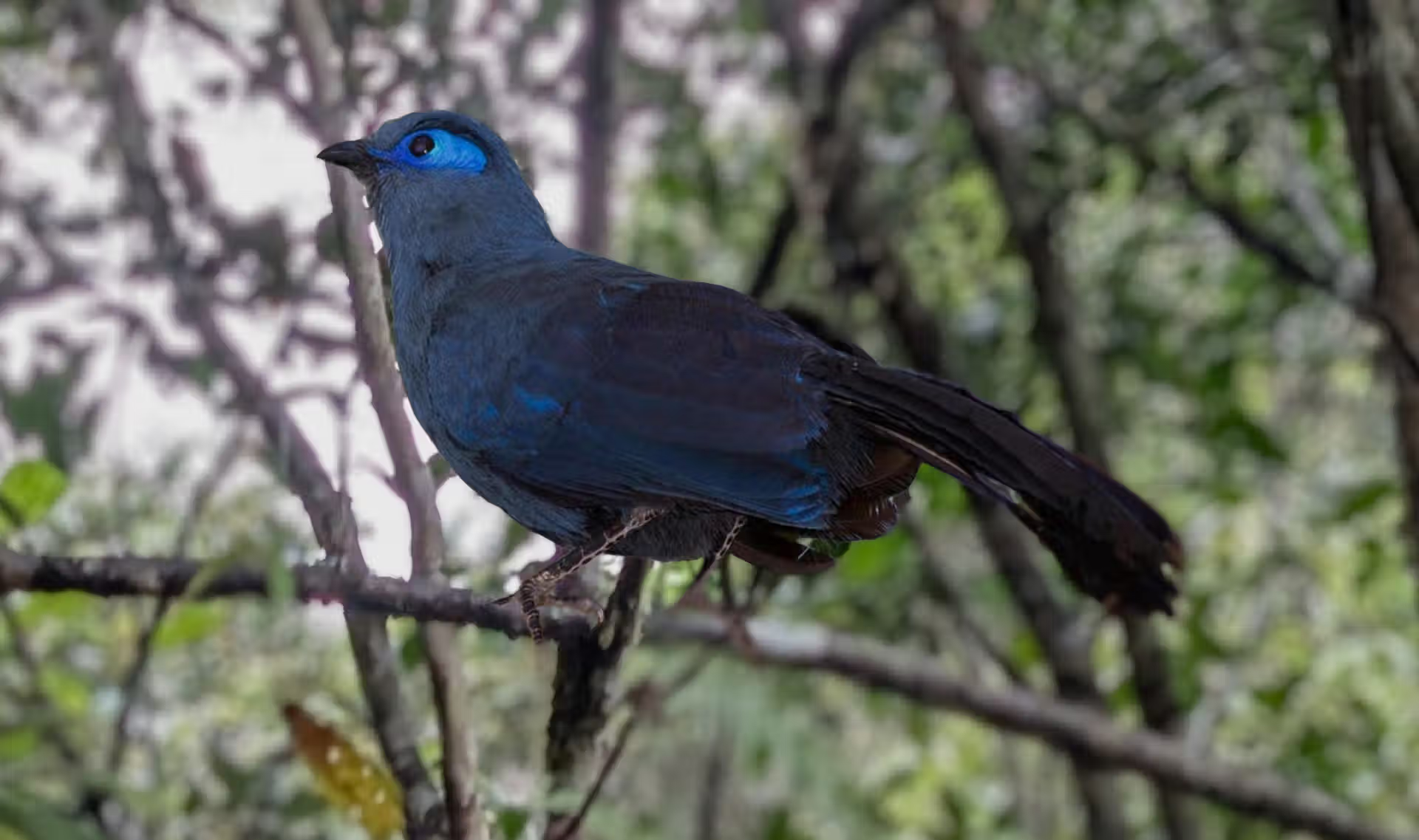
Ranomafana national park offers a variety of trails, with the shortest visits lasting as little as two hours. It is also possible to combine trails and explore other sections of the park. This is a decision you can take on the spot with your local tour guide and our staff accompanying you following your preference.
Nightwalk on the roadside
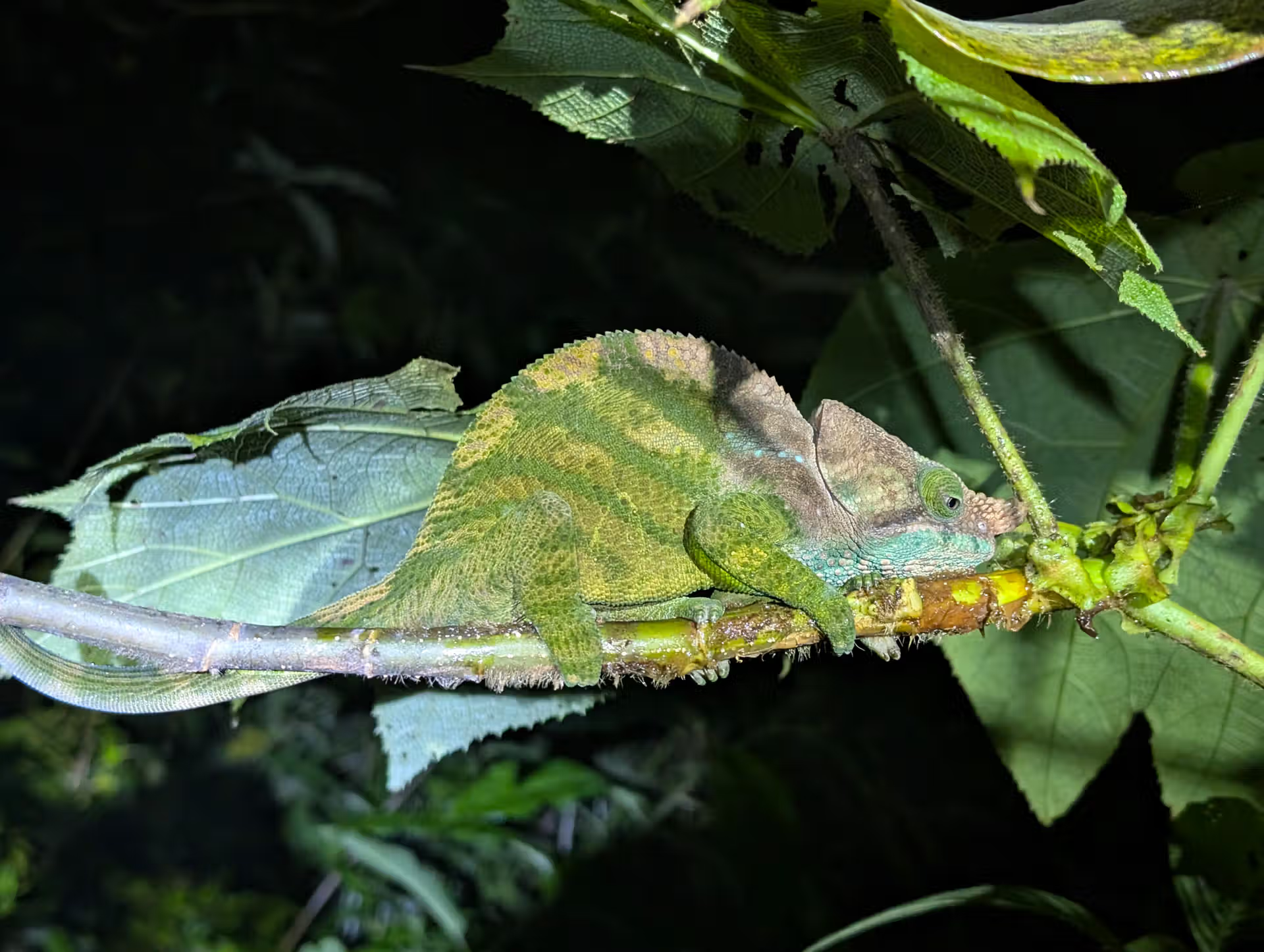
Just like in Andasibe, night walks are a popular activity in Ranomafana. As has been said, it can be conducted along the road that winds through or inside the national parks. This is an incredible opportunity to spot nocturnal animals, with the main highlight being chameleons. Be on the lookout and ready to spot dozens of these fascinating creatures gripping to the tree branches along the roadside.
A plus in Ranomafana :
Beyond its spectacular wildlife, Ranomafana offers a thrilling rafting adventure along the Namorona River. Furthermore, it’s a perfect activity for those who are looking for a more active way to explore the rainforest. The journey showcases the untamed beauty of the rainforest from a unique perspective providing a thrilling experience through the lush, dense landscape.
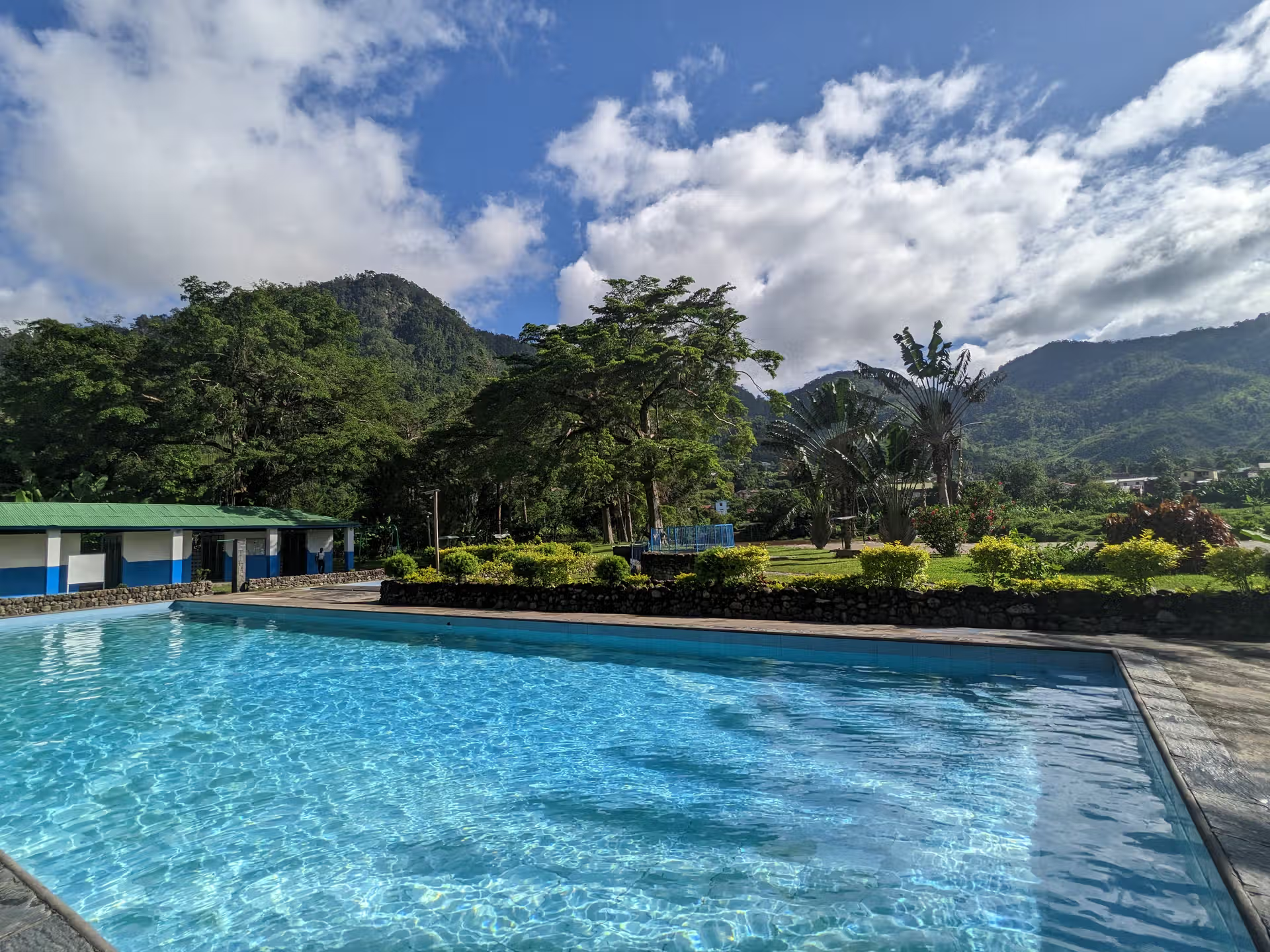
For those who want a relaxing thermal experience, Ranomafana offers a delightful swimming pool with a natural hot spring. The Malagasy name of the village, Ranomafana, literally translates to Hot Water (Rano: water, mafana : Hot), a name it earned from a natural hot spring formed millions of years ago by a fault line.
Locals have long believed that the water has therapeutic properties, particularly for ailments related to bones and joints, which is why Malagasy people from across the country travel here to benefit from the thermal baths. The entrance fee is very affordable, and the pool itself is well-maintained with fresh water added at least every week.
Our top tip is to visit early in the morning, as soon as the pool opens, or at the end of the day after your visit to the national park for a relaxing soak.
WHEN TO VISIT Andasibe and Ranomafana
Luckily, both Ranomafana and Andasibe can be visited year-round. However, since Madagascar is a tropical island, particular precaution should be taken from January to March, as these months are the peak of the cyclone season.
The weather in Madagascar is generally divided into two main seasons : a dry season from May to October, which includes the austral winter months of June to August, and a rainy season from November to April.
These seasons really interfere with the wildlife you can spot. For cold-blooded animals like reptiles are less active and harder to see during the cooler austral winter. Therefore, the rainy season from October onwards is a great time to visit if reptiles are high on your list.
For the best birdwatching experience, the prime season is generally from October to December. During these months, many birds are more vocal and active due to the breeding season, making them easier to spot and photograph.
While lemurs, the stars of the forest, may also have periods of reduced activity during the winter especially for dwarf lemurs. But for the other species it can be just a shorter period depending on their environment and food availability. Experienced local guides therefore know exactly how to find them without disturbing their natural state.
Lastly, in order to enjoy the discovery in Andasibe or Ranomafana, a minimum of one overnight is highly recommended. The average stay is in general 2 nights with a full day exploring parks and reserves.
Want to add Ranomafana on a wishlist of your Madagascar trip? Tell us more about your trip expectation by fulfilling
PRACTICAL INFORMATION
Code of conduct
In every national park and reserve in Madagascar, it is mandatory to hire a local guide in addition to your ticket entrance. You will quickly understand why when you see the dozens of intricate trails and intersections that wind through the forests.
To ensure a safe and respectful visit, there is a code of conduct to follow inside the parks :
- It is prohibited to feed or touch any animals.
- Leave only your footprints inside the zone.
- Take only pictures as souvenirs of the park.
- Always follow your local guide and stay with your group ( in case of travelling in a group). This in order to get the most out of the explanations and to avoid getting lost.
Gear and safety
For nightwalk along the roadside, it is crucial to exercise caution. The road is a public thoroughfare, so to be on the safe side, it is always best to step a bit further to the side when a car approaches.
For your comfort and safety on the trails, be sure to wear appropriate walking or comfortable shoes with good traction, as some areas can become slippery when it rains.
In the rainforest, it is also wise to wear long trousers and bring a raincoat. Even on less tough hikes, staying hydrated is always important.
Disclaimer : Please note that road durations are provided for information and estimation only. It’s difficult to give exact driving times in Madagascar, as road conditions can change quickly especially with the temporary stop on the national road now due to reparation. Our drivers and guides will, of course, inform you of any possible updates in advance.
The animals listed in the guide are a non-exhaustive list, and sightings are never guaranteed but really depend on luck since they are in their natural, wild habitat. For this reason, we always strive to find the most experienced local tour guides possible for our guests.
Now that we have covered a part of the rainforest in the red big island, what can the dry and deciduous zone offer? Stay tuned to discover our guide to trekking and adventure in Madagascar.

Comments are closed